Are you still a school furniture manufacturer?
Are you still a school furniture manufacturer?
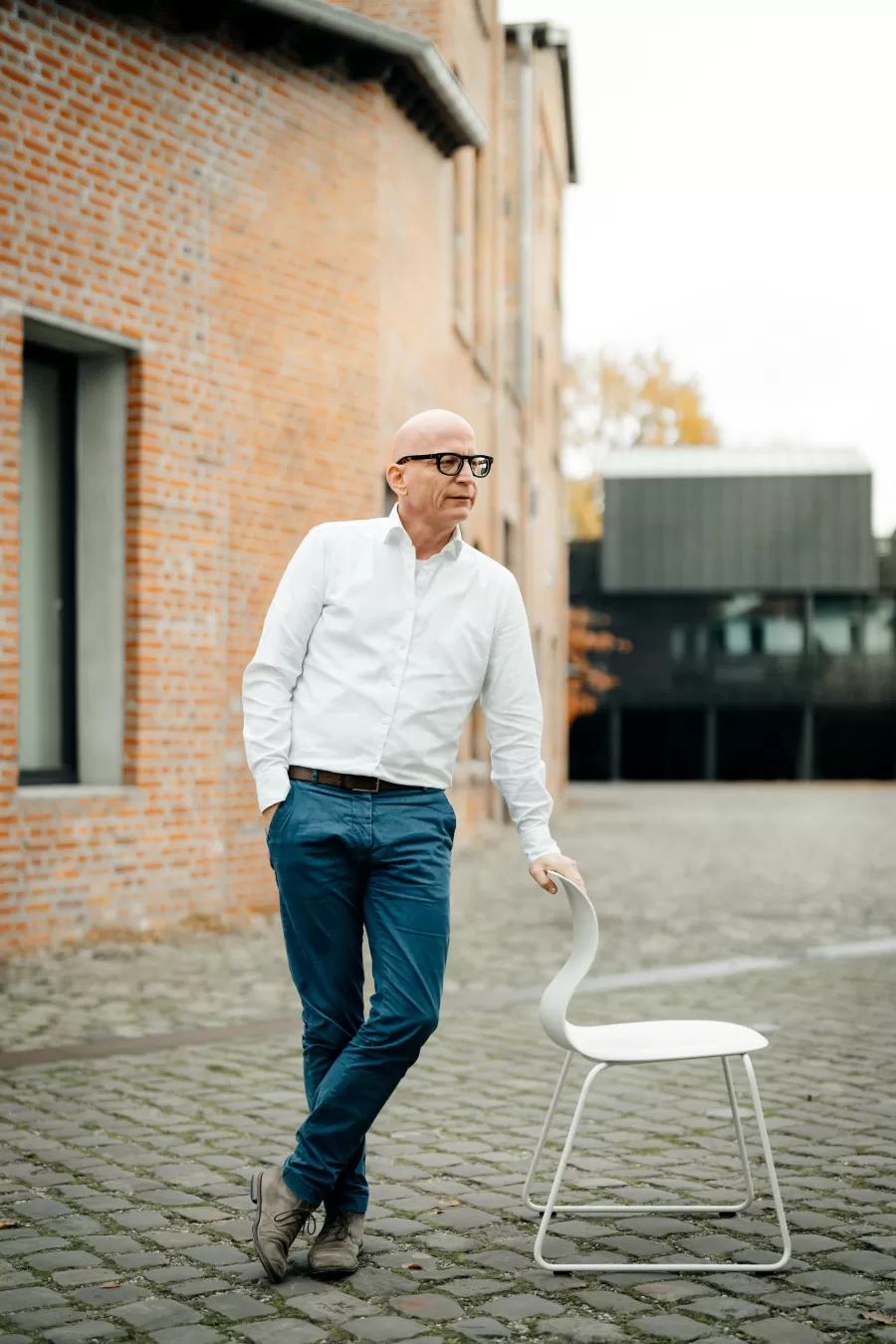
On self-perception in a changing world. Frederik Flötotto, CEO Flötotto Einrichtungssysteme GmbH
An experienced school principal asked me the above question during a lengthy conversation on my last visit. I reflexively replied, “I think we are.” However, on the return journey, I began to question my answer. The longer I thought about it, the clearer it became that I should have said, “That’s what we used to be.”
The furniture bearing the FLÖTOTTO name embodies the essence of numerous deep conversations and development projects with educators, teaching staff, and feedback from learners across various age groups and school types. These inspiring discussions go beyond furniture; they’re about meaningful, human-centered solutions that enhance well-being and performance. They focus on spatial interventions to implement educational concepts effectively, treating individual learning paths with care and addressing diverse needs in the pursuit of new knowledge.
Our development team approaches school furnishings with learning at the core: from classrooms to open learning areas, curated interspaces, and specialized art, music, or STEM zones. School days include various learning settings: individual focus, small-group collaboration, or large-group interaction. Our furniture serves as educational tools that actively shape spaces. They provide flexibility, functionality, and structure wherever needed. Our furniture reflects qualities in design, color, ergonomics, and materials—signifying appreciation for the students and teachers who spend much of their lives within school walls.
Kindergardens, schools, and universities are essential places for shaping the future, and teachers are influential change-makers and role models, especially now when migration, demographics, digitalization, and climate issues call for rethinking. How do we manage the complexity and uncertainty of these changes? How can young people feel assured they are being well-prepared for their future? These questions can only be addressed as a society if we commit to educational equity and embrace a competency-oriented education system that centers around learning.
We increasingly receive calls from architecture firms, school boards, or principals aiming to move toward the future. They speak about their challenges, describe spatial needs, and arrange to explore contemporary school furnishings with us. Simply placing desks and chairs in a room no longer suffices.
Oh, and I did call the principal back that same day to correct my answer. I told her that FLÖTOTTO has become an integral part of change across various learning environments.